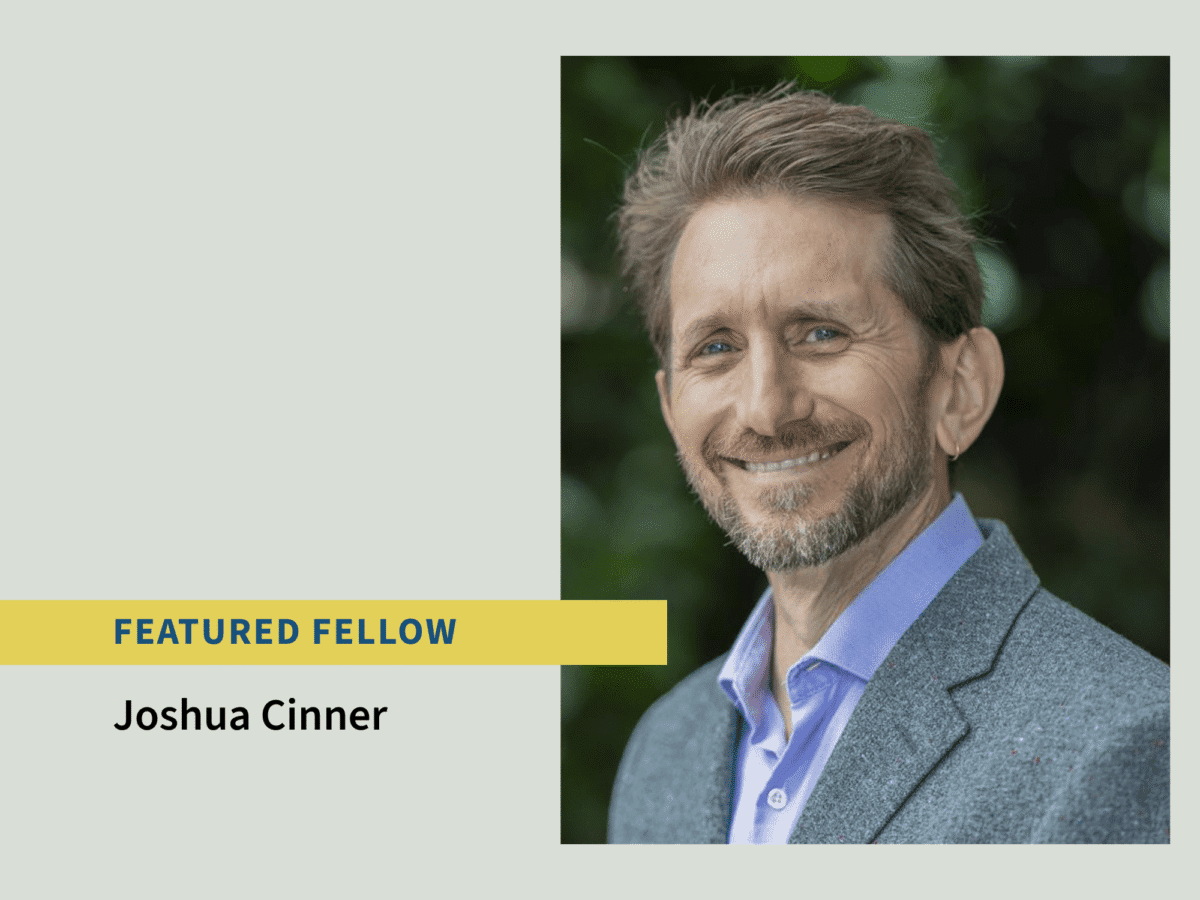
Professor Joshua Cinner
Affiliation: University of Sydney
Discipline: Human geography
Year elected: 2018
How would you describe your work at a dinner party?
Coral reef conservation is an inherently depressing line of work, since coral reefs around the world are becoming increasingly degraded from overfishing, pollution, and climate change. But I look for the bright spots- the outliers, which should be degraded, but aren’t – and seeing how we can leverage these unexpected success stories to inform positive change in other places.
What initially drew you to your field of study?
In the mid 1990s, I spent two years working in Jamaica as a Peace Corps volunteer, where I was stationed in a coral reef marine park. It was there, working on managing coral reefs in the context of poverty, colonialism, violence and other difficult socioeconomic realities that I fell in love with the complexities of trying to simultaneously promote a functioning ecosystem and human wellbeing.
What role do the social sciences play in your work?
Interesting question because geography is truly an integrative discipline and my work is so interdisciplinary. I think that some core concepts of geography- scale and human-environment interactions- are at the heart of everything that I do. Indeed, I often get asked to collaborate with ecologists precisely because I challenge them to think about these concepts, which provides a novel perspective and approach to the way the approach problems.
Tell us about a recent moment of motivation or inspiration?
Last week, I got to see my 8 year old son play in an ensemble at the Sydney Opera House. It was so inspiring to be around all these young musicians working together to make beautiful music. My research is inherently interdisciplinary- I work with a broad range of other social scientists, ecologists, statisticians, environmental scientists – and everyone has a part to play, like an ensemble.
What question or issue, in your field, keeps you awake at night?
What has been keeping me up lately is how we can generate cumulative cross-systems and cross-scale learning from the emerging bright spots research. The research to date on bright spots has tended to be extremely haphazard- each study using will-nilly approaches and definitions- and as a body of research, it is more a collection of anecdotes than a formal approach to environmental problem solving. What is keeping me awake is my ideas about the ways in which we can facilitate integrative learning from bright spots.
What continues to motivate your work?
My work on increasing the sustainability and resilience of coral reef fisheries is motivated by a love of problem solving (and coral reef sustainability is certainly a wicked problem), the joy I get from bringing together different disciplines to look at a common issues, and the strong desire to leave the planet in a better state for my two boys.